Chapter 1 — Early Experiments (2020)
Early prototypes exploring tokenization and creator commerce
The earliest phase of Foundation Labs was a period of exploration.
We were convinced that blockchains would unlock digital property rights, but it was not yet clear how mainstream audiences would adopt this new capability.
Our first experiments focused on introducing crypto through experiences that felt familiar.
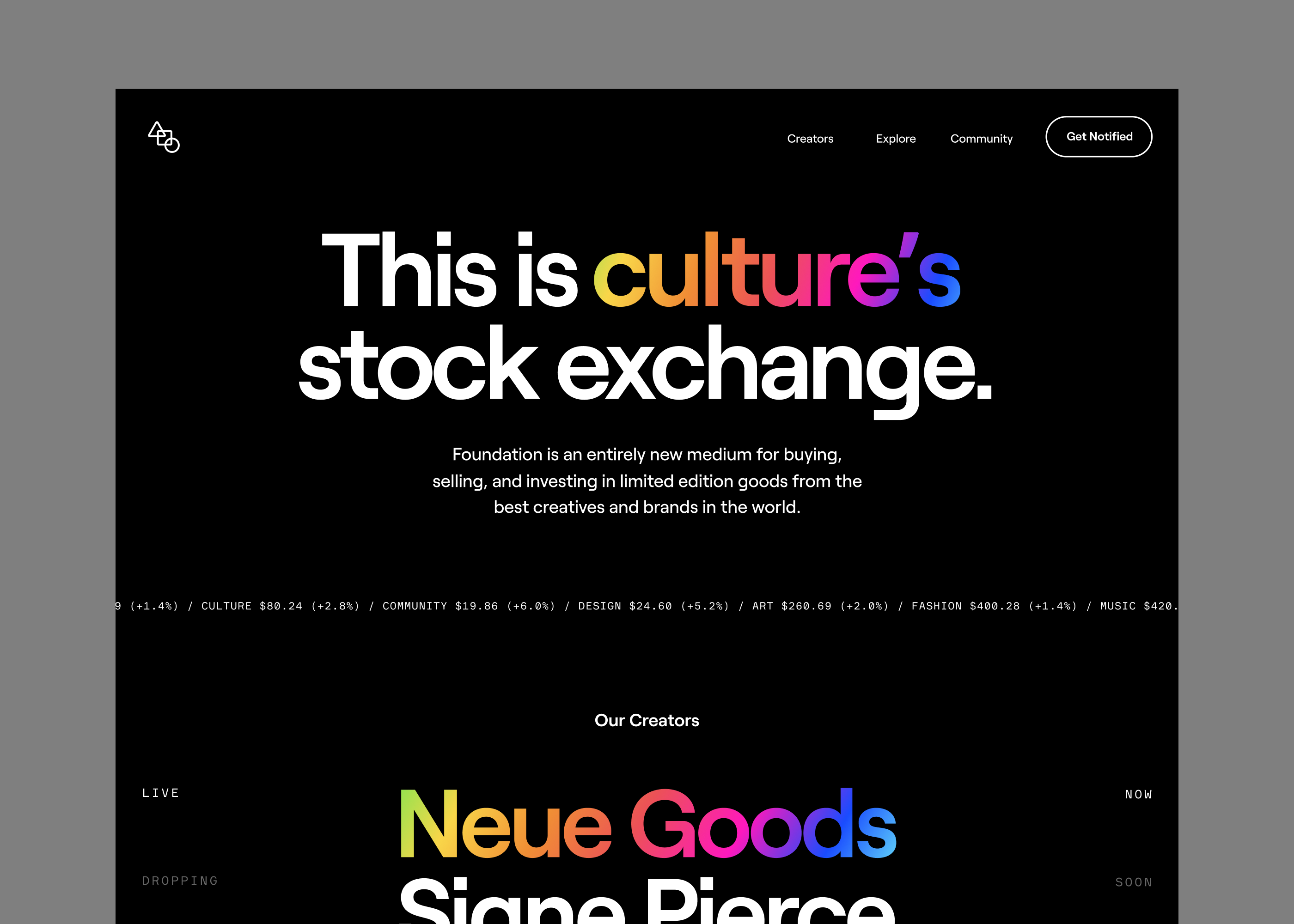
Initial Hypothesis
Our early assumption was that mainstream users were not ready for purely digital ownership.
Instead, we believed the path forward would begin with physical goods.
The Idea
Tokenize physical merchandise.
Creators could sell real-world items while tokens introduced new dynamics:
- liquidity through secondary trading
- transparent ownership records
- new economic relationships between creators and collectors
We also explored pricing and redemption mechanics inspired by early experiments like Unisocks, including dynamic curves and token redemption models.
This approach was meant to bridge traditional commerce and crypto-native ownership.
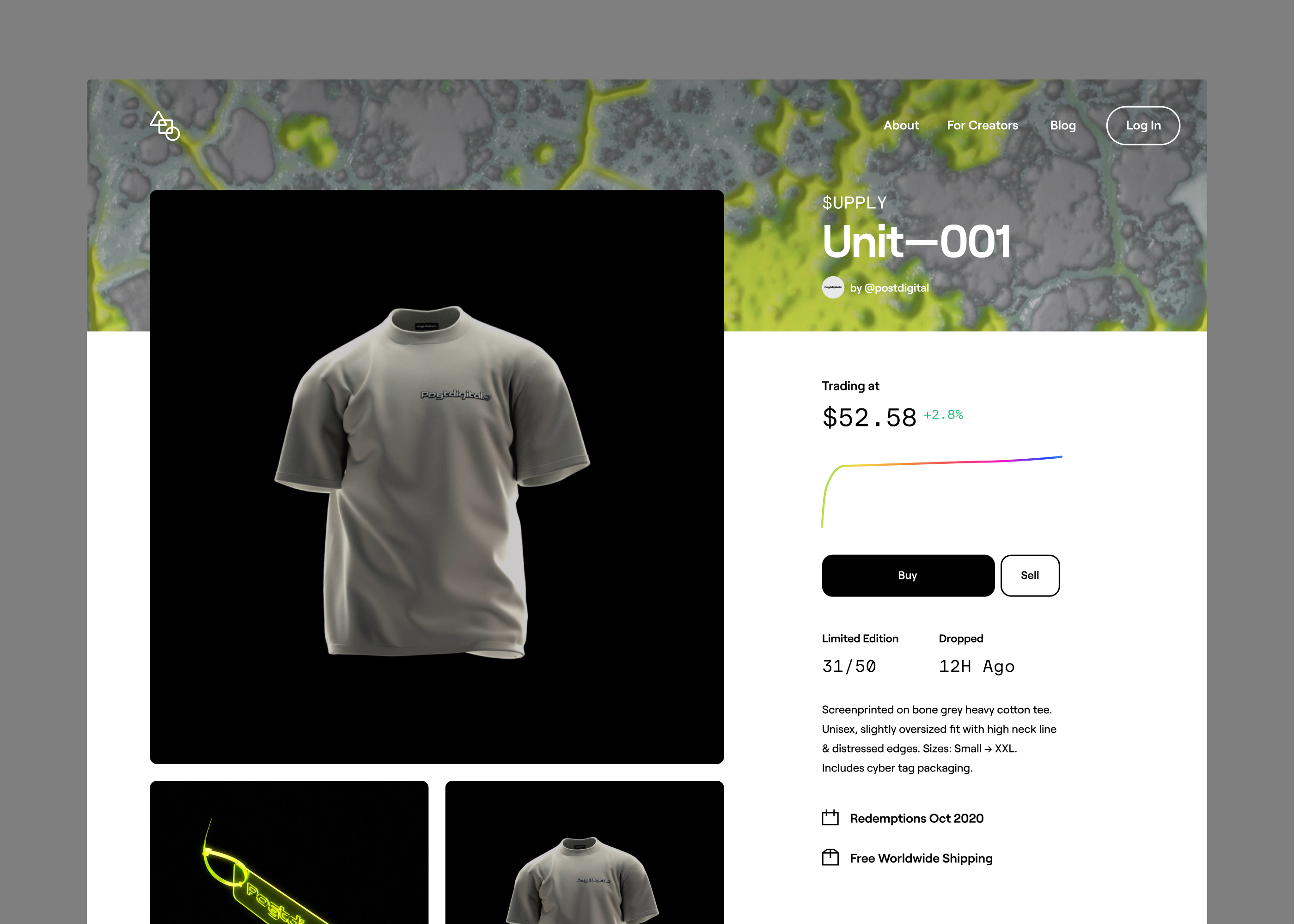
What We Built
During this period, we experimented with several early concepts.
Tokenized Merchandise
Creators could issue tokens tied to physical products.
The goal was to explore whether tokenization could introduce new market dynamics into creator commerce.
In practice, this introduced additional complexity—particularly around redemption mechanics—which often confused users more than it helped them.
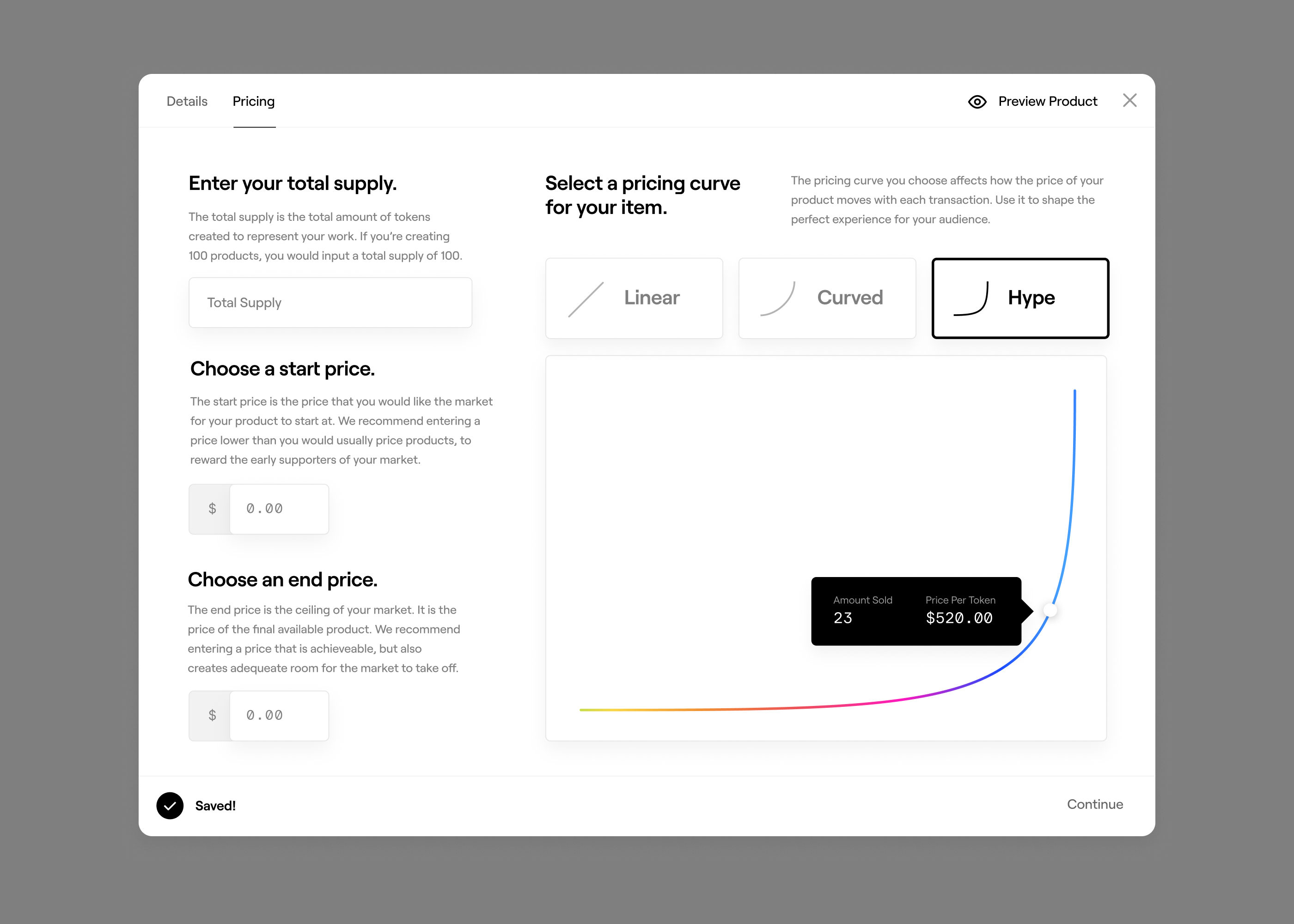
Early Wallet UX
We explored different approaches to onboarding users into crypto, including early attempts at account abstraction.
At the time, the infrastructure was not ready.
Wallets were difficult to use, and many interactions required complex signing flows that created friction for new users.
We also experimented with early scaling approaches, including sidechains, as precursors to what would later become L2 ecosystems.
What We Learned
The experiments quickly surfaced an important realization.
Physical Merchandise Was a Solved Problem
Creators already had effective tools for selling physical goods.
Platforms like Shopify allowed creators to:
- launch stores easily
- sell merchandise directly to fans
- manage fulfillment and payments
The additional liquidity introduced by tokens did not materially improve the creator’s business.
In some cases, speculative trading around merchandise worked against the creator’s brand.
The Real Opportunity Was Digital Work
Where creators did struggle was monetizing digital content itself.
Digital creators could distribute their work widely across the internet, but they had no native way to establish ownership or value around those files.
The traditional art world had developed awkward solutions.
One approach involved placing digital files on USB drives and selling those as physical objects to collectors.
Blockchains offered a more natural primitive.
NFTs allowed digital works to exist as property native to the internet—owned, tracked, and transferred independently of any platform.
A Moment of Clarity
This insight became especially clear through conversations with early digital artists.
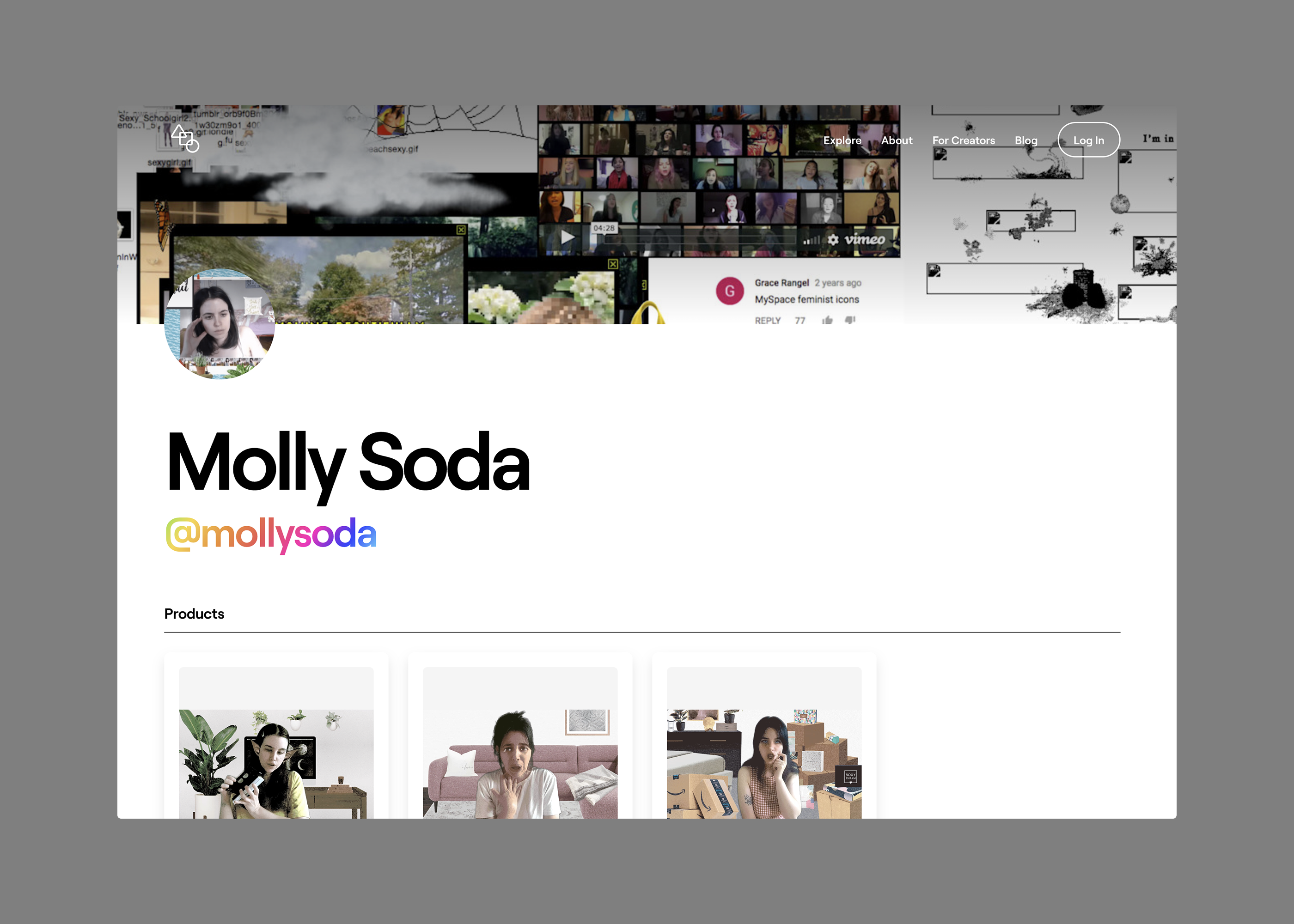
One example was Molly Soda, whose work had gained prominence on Tumblr years earlier. She was clear that her digital creations had real value and deserved to be treated as legitimate cultural artifacts.
NFTs provided the infrastructure to make that possible.
For the first time, digital files could have:
- verifiable ownership
- transparent provenance
- secondary markets
A New Product Philosophy
Around this time, we articulated a new product philosophy:
We published this in advance of the Foundation marketplace launch to express our belief that the product should embrace, rather than obscure, its cryptonative nature.
Ownership should be visible and legible within the experience.
Wallets, transactions, and provenance were not technical details—they were core to the value proposition.
This was reinforced by the market itself.
The early demand side was overwhelmingly cryptonative. The buyers most engaged with these assets understood and valued onchain ownership. They wanted:
- visible wallet identity
- transparent provenance
- direct participation in markets
- assets that could move independently of any platform
Rather than abstracting the technology away, we chose to lean into it.
Key Conviction
By the end of this period, the company had developed a clear conviction:
NFTs were the first credible mechanism for granting digital property rights to creators.
This belief would shape everything that followed.
What This Era Produced
None of the products built during this period still exist.
But this phase served as the crucible of the company.
It produced the lessons and convictions that made the next chapter possible.
Those lessons ultimately led to the launch of the Foundation NFT marketplace.