Chapter 5 — Aura (2025)
A consumer prediction market platform for pop culture
By late 2025, it had become clear that one consumer use case in crypto was gaining traction with mainstream audiences: prediction markets.
Prediction markets were not new. Projects like Augur, founded in 2014, had experimented with decentralized prediction markets since the earliest days of crypto.
But distribution, liquidity, and consumer accessibility had improved.
Prediction markets were no longer confined to crypto-native audiences—they were beginning to reach mainstream users.
For the first time, prediction markets were accessible through products that were easier to understand and participate in. The core interaction—trading on the outcomes of real-world events—was intuitive.
After Rodeo, we set out to explore whether we could apply everything we had learned about consumer product design to this emerging category.
The Opportunity
Rodeo revealed an important constraint.
Mainstream audiences did not care about owning digital objects.
But they did care deeply about real-world events.
Prediction markets offered a compelling combination:
- a novel interaction: trading on outcomes
- familiar content: sports, entertainment, politics, and culture
This dramatically expanded the potential audience.
Where Rodeo’s content had been niche—centered around digital creators—prediction markets could engage millions of people through topics they already followed.
The Thesis
Aura explored the idea that prediction markets could function as a form of interactive entertainment layered on top of existing cultural content.
Rather than focusing purely on financial trading, the product emphasized participation, play, and cultural engagement.
Content categories included:
- sports
- entertainment
- pop culture
- reality television
Reality television proved particularly compelling.
Its regularly scheduled programming created a natural rhythm for engagement and repeat participation. Each episode generated new moments to predict outcomes and participate in the product.
What We Built
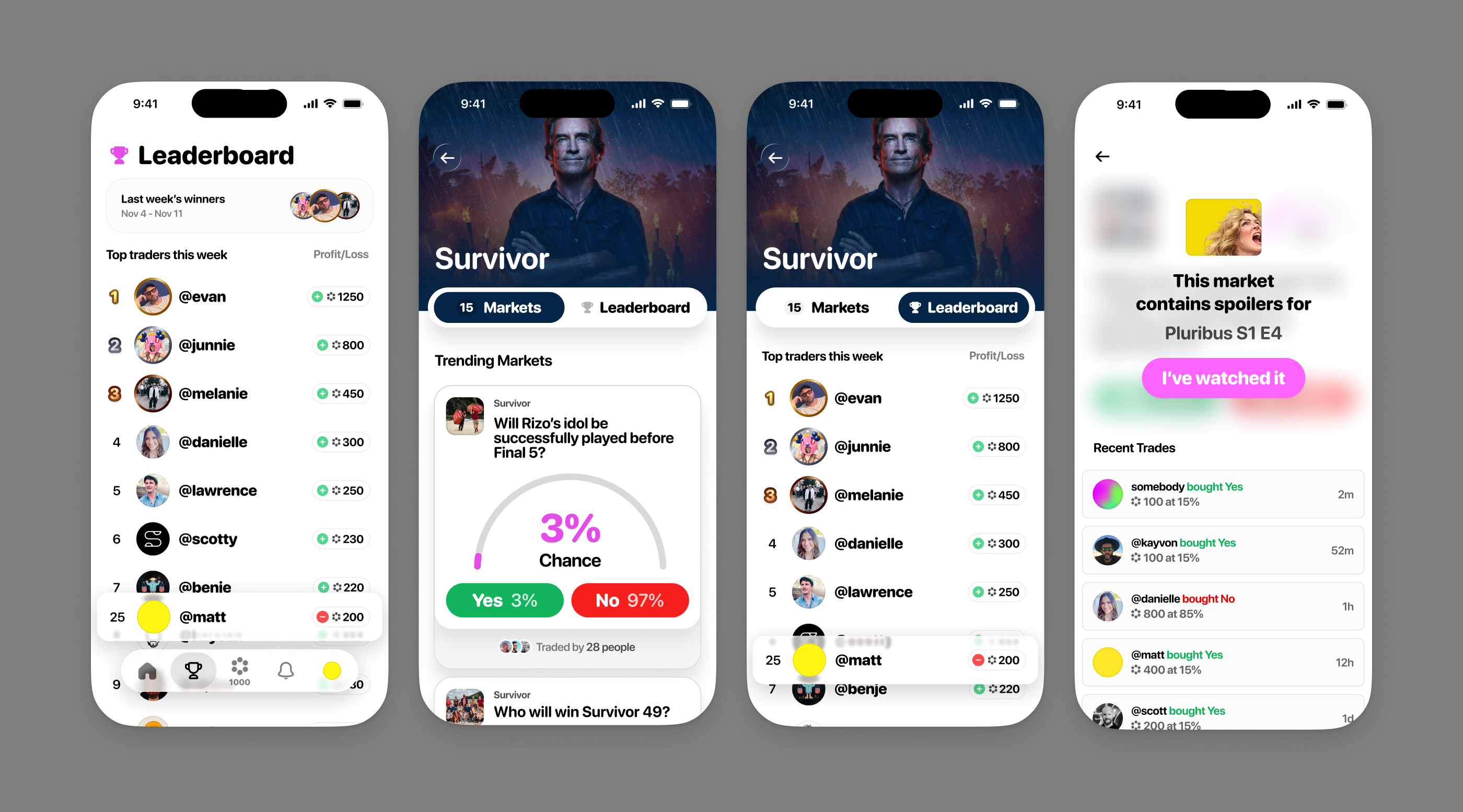
Aura turned prediction markets into a game.
Users could:
- trade predictions on cultural events
- compete with friends and other participants
- track outcomes as events unfolded
To move quickly, the product was built with an in-app currency rather than crypto infrastructure.
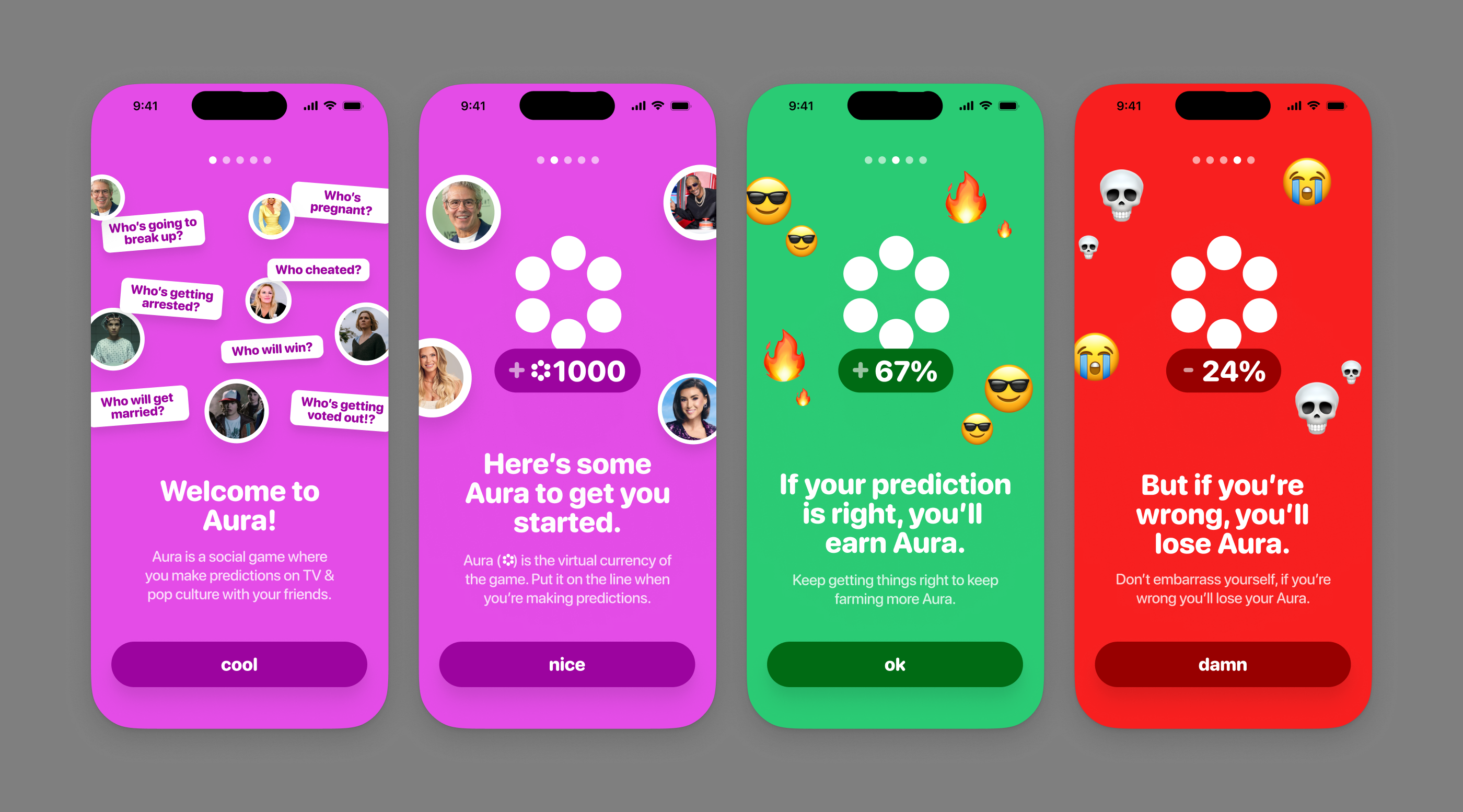
This allowed us to:
- avoid regulatory overhead
- remove wallet onboarding
- eliminate onramps and crypto friction
- focus entirely on the consumer experience
The product was designed to feel playful, intuitive, and culturally native.
Importantly, it was completely divorced from crypto branding and vocabulary.
Early Experiments
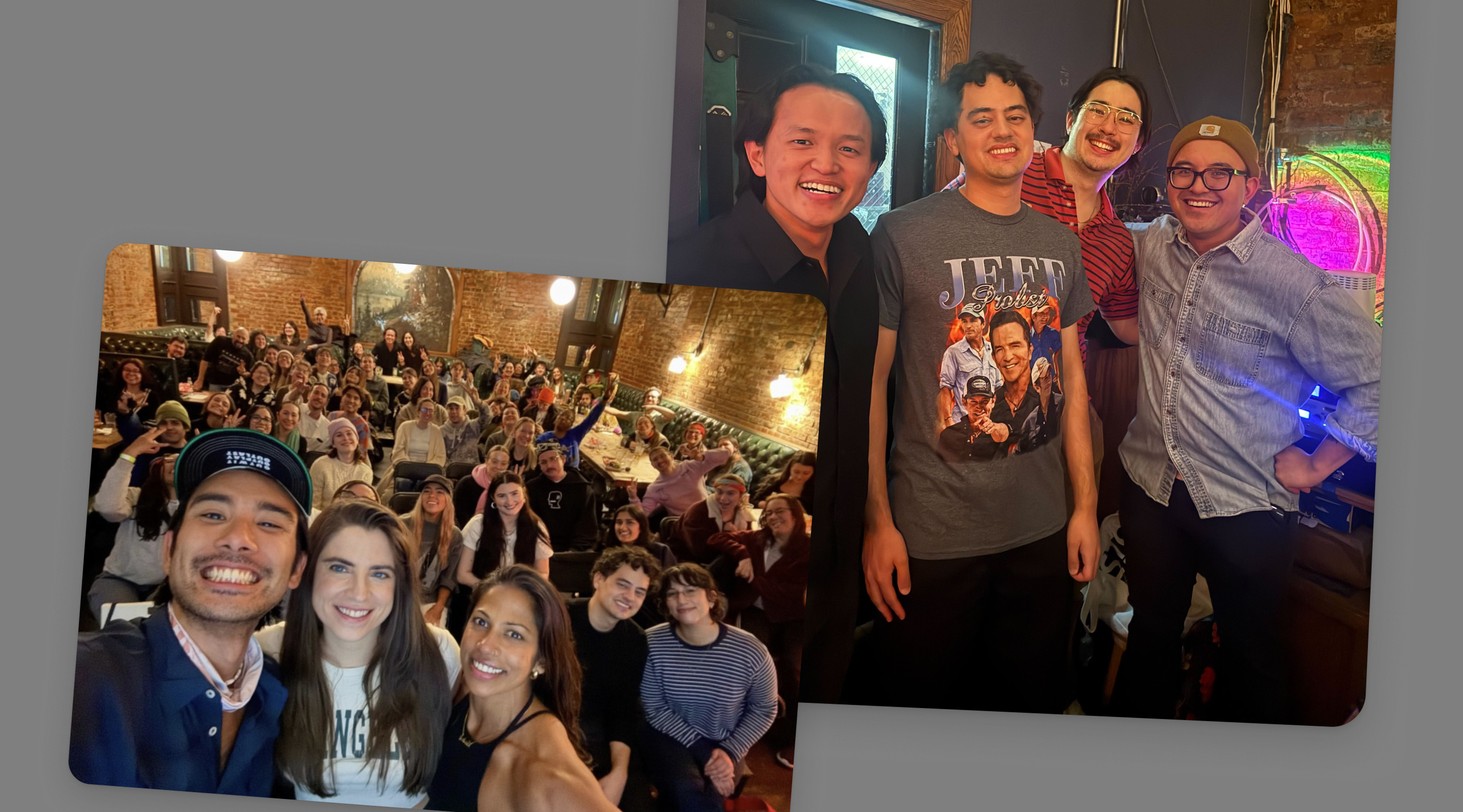
Our first users came through small in-person gatherings.
We hosted watch parties in Brooklyn, where participants could watch events together while trading predictions in real time.
These sessions helped validate the core experience:
Prediction markets could be fun, social, and immediately understandable.
What Worked
Aura demonstrated that our consumer instincts remained strong.
The product was:
- accessible
- playful
- engaging
- easy to understand
Unlike earlier experiments, users did not need to learn new concepts like NFTs or digital ownership.
The activity itself already made sense.
The Reality
Despite promising early signals, the path to retention, scale, and monetization remained long.
Prediction markets were becoming an increasingly competitive category, and Aura entered the space without an existing source of distribution or liquidity.
Scaling the product would require:
- time
- sustained experimentation
- a longer runway than the company had remaining
At the same time, Foundation Labs was managing multiple products and communities.
The Decision
With runway dwindling, we made the difficult decision to conclude the company’s operations responsibly.
Our priority was ensuring the communities and products we had built could transition thoughtfully into their next chapters.
This included:
- Foundation continuing under new ownership
- Rodeo being wound down with care
The work of the company would continue through the creators, collectors, and communities that helped shape its journey.